 Garage Door and Parts Supplier California
Garage Door and Parts Supplier California
Garage Door and Parts Supplier California
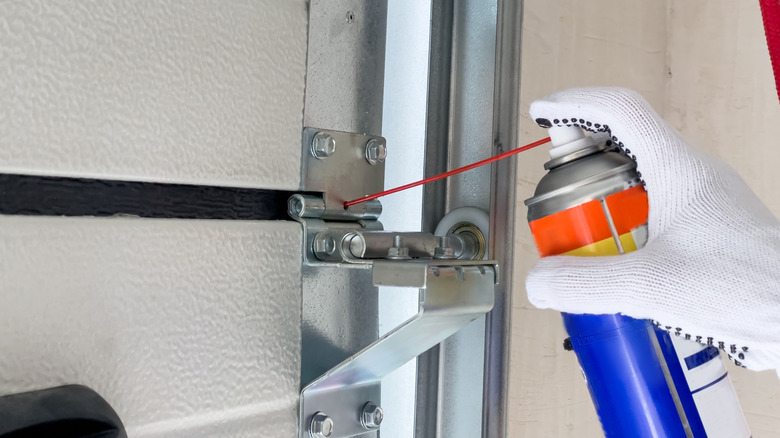
A garage door rail system takes a surprising amount of punishment over its working life. Every open and close cycle puts load through the joints, brackets, and connection hardware that hold the track together. When those connection points start to weaken, the whole door suffers.
Across West Ewell, East Ewell, and the streets surrounding Ewell Village, homeowners deal with a range of garage types, from older concrete sectional builds to newer timber framed openings. The rail systems inside those garages share the same vulnerability regardless of age or construction style: connection stress that builds up quietly until it becomes a real problem.
Keeping on top of that stress is a core part of managing overhead door replacement hardware systems, and understanding where the weak points tend to appear is the first step toward preventing expensive failures.
Rail connections carry load every time the door moves. The joint between two track sections, or between a track and a bracket, experiences a small amount of flex on each cycle. That flex is normal, but it compounds over time into fatigue damage.
In garages near Ewell Court and along Kingston Road, wall movement caused by seasonal ground shift adds an extra variable. Walls that move even slightly pull bracket fixings out of alignment, which transfers extra load onto the rail joint rather than distributing it evenly through the structure.
Poor original installation is another common cause. A rail joint that was not aligned properly from day one will reach a failure point much sooner than one fitted with care and correct hardware.
The bend where the vertical track meets the horizontal overhead rail is one of the highest stress zones in any door system. The curve forces a change of direction in the door panel travel, and that directional change applies both tension and compression forces to the connection hardware at that point.
Homes along Ruxley Lane and Chessington Road often have garages with low header clearance, which means a tighter radius curve in the track. A tighter curve concentrates more stress at the transition joint, making that connection point wear faster than it would on a standard radius setup.
Checking the curve section for cracks, elongated bolt holes, or visible deformation at the connection flange is something worth doing every year as part of basic maintenance.
On taller door openings, two vertical track sections are often joined with a splice plate rather than using a single length of track. That splice joint is a common stress point that gets overlooked because it sits on the wall and is easy to ignore during casual inspection.
Properties near Stoneleigh and Auriol with full height garage doors frequently have splice joints in the vertical track. If the splice plate is undersized for the door weight, or if the fixing bolts have loosened over time, the joint begins to allow micro movement that gradually widens into a visible gap.
When you look for quality Rail System Hardware to replace a worn splice or fasten a loose joint, matching the gauge and profile to your existing track is essential for a repair that actually holds.
The back hanger is the fitting that suspends the horizontal track from the ceiling or structural header. It carries the weight of the track, the trolley, and part of the panel load when the door is open. That makes it a connection point under near constant load rather than cyclical stress.
Garages backing onto Hogsmill Open Space and properties near Ewell Court Park sometimes have ceiling timbers that have taken on moisture over the years. A back hanger bolted into wet or partially rotted timber looks fine from below but provides very little actual holding strength. When the timber dries and shrinks seasonally, the hanger bolt works loose and the track begins to sag.
A sagging horizontal rail changes the geometry of the entire system and puts abnormal stress on every other connection point downstream. Catching a loose back hanger early is far simpler than dealing with the cascade of problems it causes if left.
The door itself will usually tell you something is wrong before a visible inspection finds anything. Changes in travel sound, resistance at certain points in the cycle, and uneven movement between the two sides of the door are all signs worth investigating at the rail connections.
A grinding noise that only appears when the door reverses direction often points to a connection joint that is slightly out of alignment. The panel roller catches on the misaligned edge every time travel direction changes, and that catching puts additional shear stress on the joint each time it happens.
Reviewing vertical track movement guidance can help you match the symptom to the likely stress point so you are inspecting the right area rather than checking the entire system from scratch each time something changes.
When a track section has developed stress damage at a connection point, a repair to the joint alone often does not solve the underlying problem. The metal around the joint may have already deformed enough that no amount of tightening will restore the correct geometry. Replacement of the affected section is the more reliable fix.
For a standard seven foot door opening, common in homes along Epsom Road and near Ewell Downs, a vertical track pair sized correctly for that height makes the job straightforward. You can Order Garage Door Tracks in the right length so the replacement section matches the original run without cutting or splicing.
For taller openings, an eight foot vertical track pair is the standard choice. If your garage has the extra height found in some of the detached properties near Bourne Hall Park or along London Road, you can Purchase Vertical Door Tracks in the eight foot length to get a clean replacement with no joins in the vertical run.
Rail connection stress is not something that announces itself dramatically. It builds gradually, shows up as minor symptoms, and only becomes obvious once the damage is already significant. Regular inspection of the key connection points catches problems while they are still straightforward to address.
Whether the garage sits on a quiet road near St Mary the Virgin Church or backs onto a busier route like the A24, the same connection points carry the same load and experience the same fatigue over time. The door type and opening size change, but the stress physics do not.
A working knowledge of where rail systems fail and why makes maintenance easier and replacement decisions clearer. That knowledge pays off every time a small fix prevents a larger and more disruptive repair down the line.
Address: 4949 Florin Perkins Rd Ste 30A, Sacramento, CA 95826
Phone: (916) 414-9070
Legacy Garage Door Depot, with supplier stores in Santa Clara and Sacramento, delivers premium garage door parts at competitive prices. The firm provides a comprehensive range of components for homeowners, technicians, and garage door companies. Their inventory includes reliable torsion and extension springs, garage door openers, Liftmaster models, remotes, and keypads. They also stock rollers, cables, tracks, hinges, and seals, offering a full selection of genuine and aftermarket replacement parts with fast local and online availability.
The store operates 24/7 online and can be reached on their primary lines at, +1 408-850-2617 and +1 916-414-9070.